At the 61st Venice Biennale, the Cuban Pavilion will present a project by Roberto Diago that, starting from the diaspora, proposes a reflection on freedom within the context of an island marked by the embargo.
We continue our exploration of the projects that will be on display at the upcoming 61st Venice Biennale International Art Exhibition, open to the public from May 9 to November 22, 2026, with one of the national pavilions that, although located outside the official perimeter of the Giardini and the Arsenale, is being hailed as one of the most politically and symbolically charged. The Pavilion of the Republic of Cuba will present Hombres Libres / Free Men, a project by artist Roberto Diago, curated by Nelson Ramírez de Arellano Conde and with Daneisy García Roque as curator, installed at Il Giardino Bianco – Art Space, located at Via Garibaldi 1814, from May 9 to November 22, 2026.
The title, Hombres Libres (Free Men), takes on particular significance in light of the situation on the island. Following the renewed tightening of restrictions imposed by the Trump administration, with sanctions against countries that supply oil to Cuba and the resulting energy blockade, the country faces prolonged blackouts, reduced public services, the suspension of cultural events, and a crisis that many observers compare to the “Special Period” of the 1990s. More than one hundred Cuban artists and intellectuals have recently signed a call against what they define as a “genocidal act,” requesting international solidarity in the face of an embargo that has lasted more than 60 years and which the United Nations General Assembly has repeatedly urged to be lifted, always encountering firm opposition from the United States and Israel.
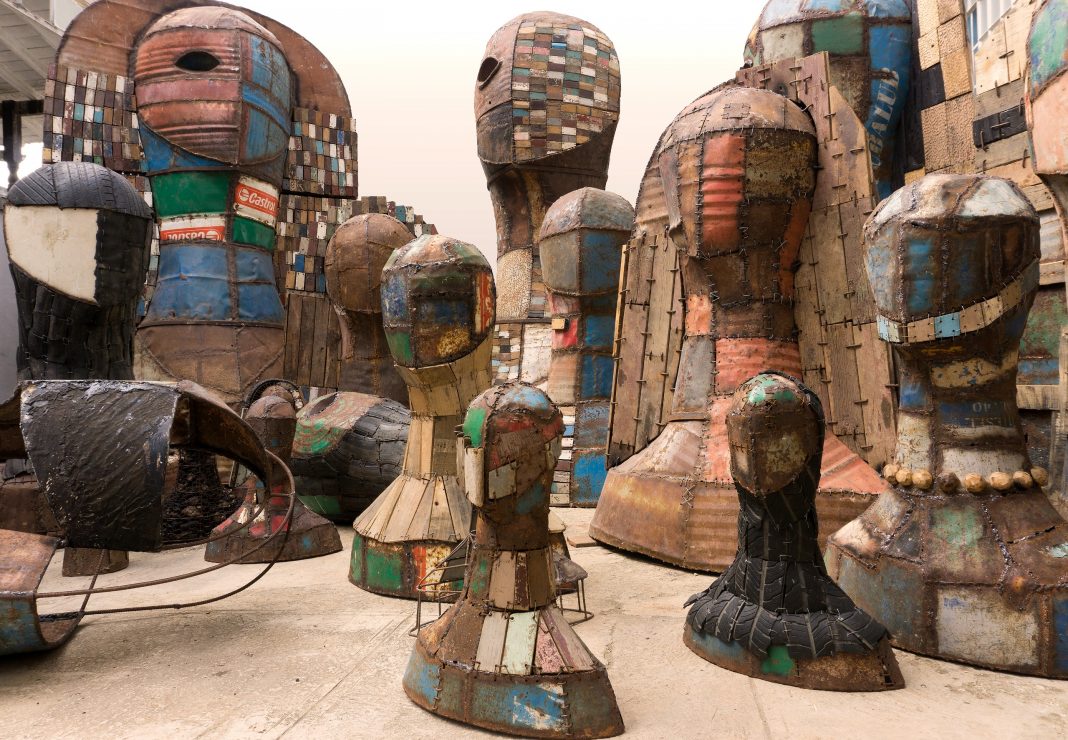
In this context, the work of Roberto Diago, born in Havana in 1971, a painter, sculptor, and installation artist with a long international career, acquires additional resonance. Diago has already participated in the 47th and 57th Venice Biennales, as well as the Havana Biennial, and has exhibited at Harvard’s Ethelbert Cooper Gallery, the National Museum of Fine Arts in Havana, and Casa de América in Madrid, among other institutions. His works are part of the collections of museums such as the Museum of Fine Arts in Boston, the Reina Sofía Museum in Madrid, and the Museum of Black Civilizations in Dakar. For more than three decades, Diago has investigated the legacy of the African diaspora and the persistence of forms of subordination and racialization in the present. His research, often constructed with reclaimed materials—rusted metals, wood, plastic, and waste—addresses “The Essence of Slavery for Contemporary Black People,” intertwining historical memory and identity tension.
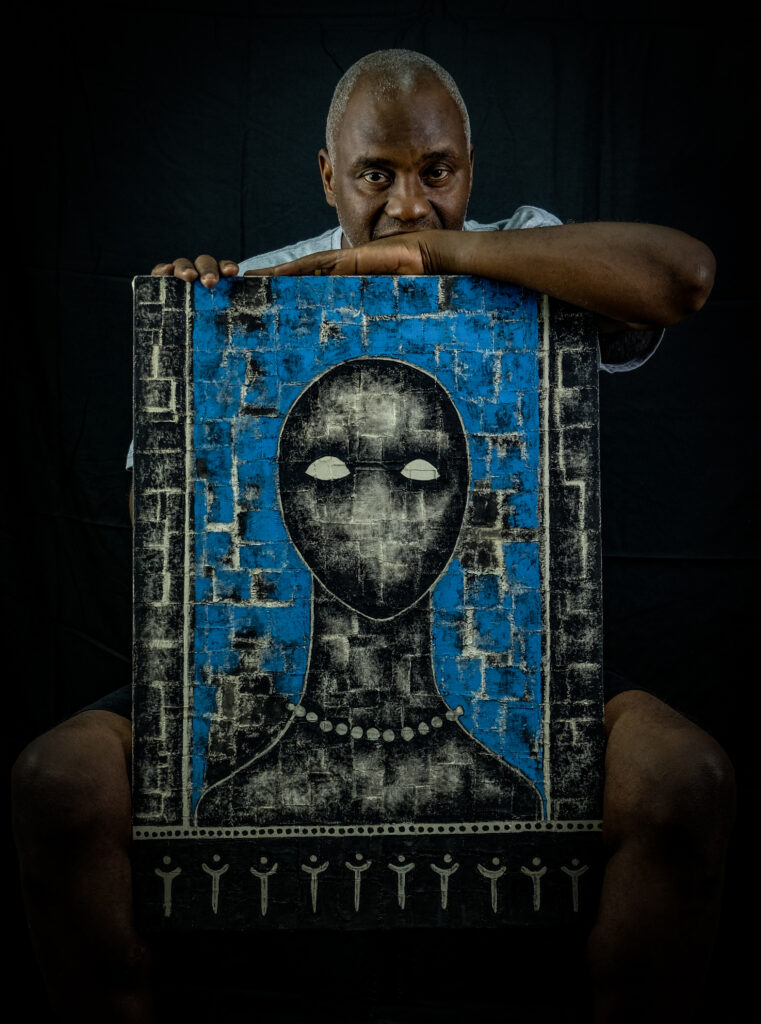
Roberto Diago’s installation for the Venice Biennale comprises a group of sculptures—heads of varying sizes—that advance toward the viewer. Their surfaces are marked by raised scars that cut across corroded metals and raw wood, like tactile traces of a history that refuses to be forgotten, presences that reclaim their own survival. In Diago’s poetics, the scar is a sign of resistance, a declaration of identity, an affirmation of dignity.
The concept of “free man” does not coincide with a legal or formal definition. For Diago, freedom is a practice, a constant tension, an exercise in memory. It is the capacity to recognize one’s own marks and to oppose distorted or erased historical narratives. From this perspective, black skin, far from being a neutral surface, becomes a geographical map of traumas and resilience.
At a time when the island is once again trapped under the pressure of an embargo that many consider intolerable from the perspective of international law and its humanitarian consequences, Hombres Libres (Free Men) seeks to question the very meaning of freedom, for a direct, unmediated confrontation with colonial history and slavery, as well as with contemporary forms of exclusion and marginalization, evident today even in the so-called democratic Western world.
The article was originally published on exibart.com